


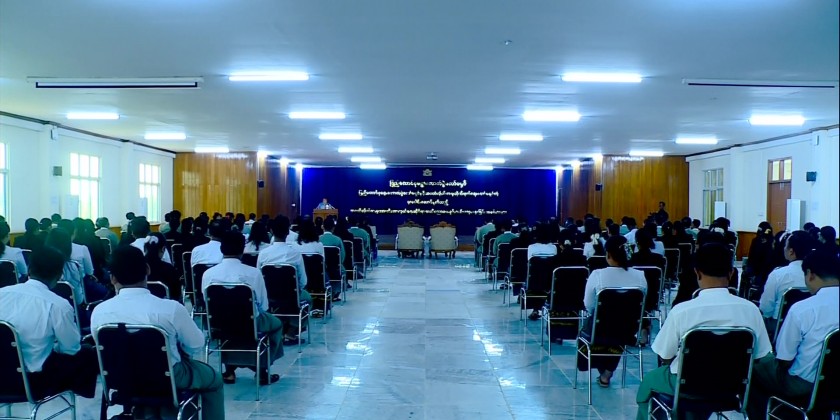
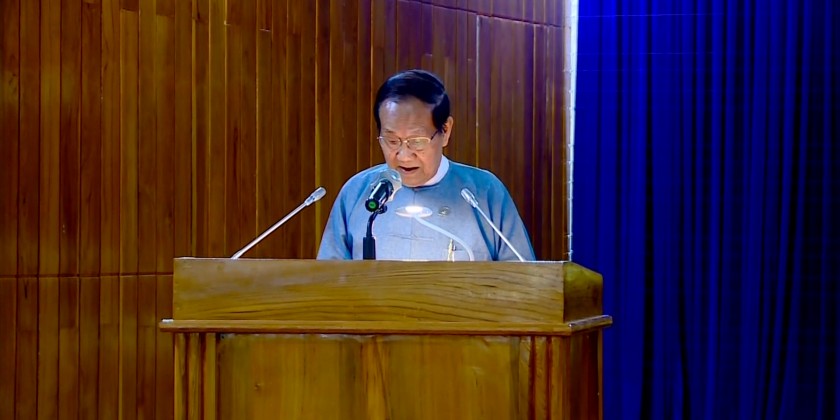
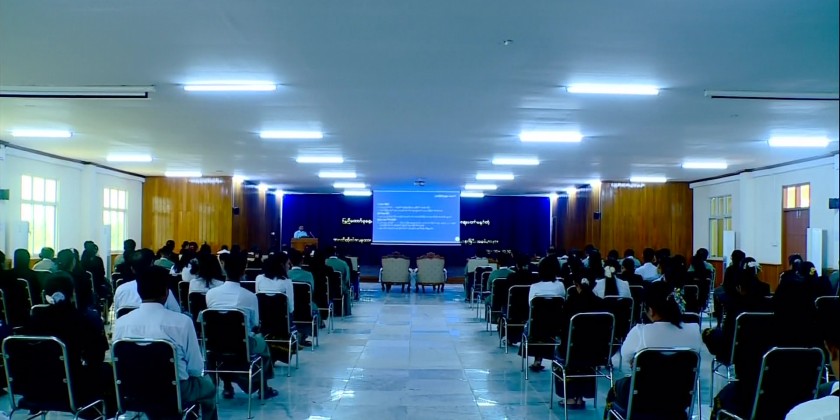
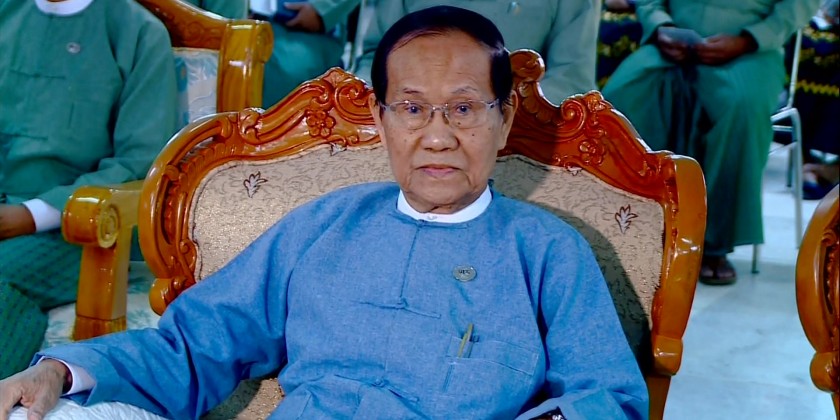
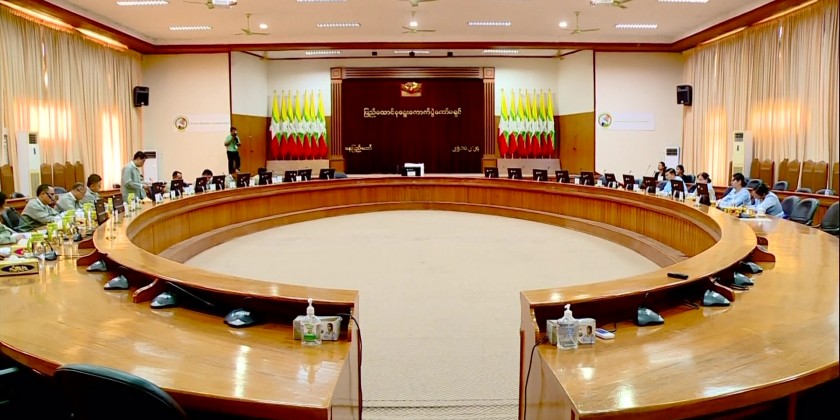
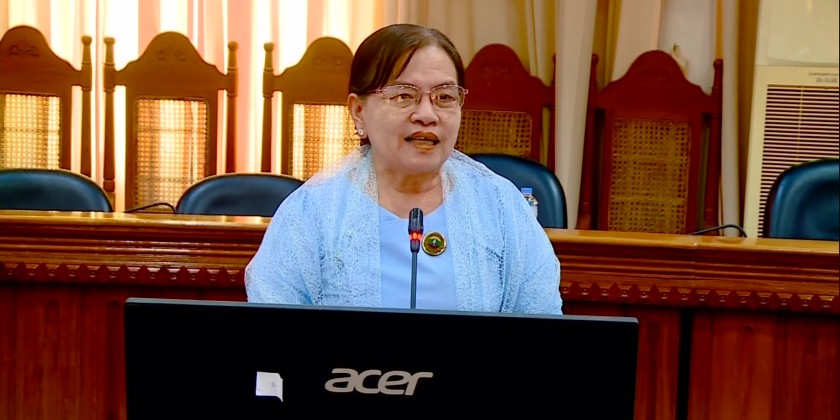
The Awareness Seminar on Anti-Corruption co-organized by the Union Election Commission and Anti-Corruption Commission was held at the annexed building of the office of UEC in Nay Pyi Taw on 25th October and attended by UEC Chairman U Ko Ko, Chairman of Anti-Corruption Commission U Sitt Aye, UEC members, member of ACC and officials.
In his opening remark at the event, UEC Chairman said that in line with the guidelines of the State, the Anti-Corruption Commission expressed its commitment to fostering open discussions on corruption prevention with sincere dedication. Through these discussions, staff members can understand the provisions of anti-corruption laws, penalties, types of offenses, and the consequences of corruption, enabling them to proactively prevent it. In line with the adage “Prevention is better than cure,” the emphasis is on stopping corruption before it occurs, rather than investigating and taking action afterward.
The Chairman of Anti-Corruption Commission elaborated that the Commission aims to create a transparent and ethical society by conducting awareness-raising sessions. Corruption is defined as the misuse of entrusted authority or position for personal gain, amounting to a breach of ethics.
The Commission highlighted that corruption not only hinders national development but also negatively impacts legislative, administrative, judicial, political, economic, cultural, and social aspects of the country.
Then, the officials from the office of Anti-Corruption Commission explained regarding with Anti-Corruption Law and investigation phases, natures of corruption, root causes of corruption, negative impacts and preventive measures and the attendees raised the inquisitive questions.
After the talk, the Anti-Corruption education team led by Commission member Daw Kyu Kyu Win met with the members of Corruption Prevention Unit – CPU of the office of UEC and discussed regarding with the experiences gained in the work implementation of anti-corruption groups, advantages and disadvantages and review.